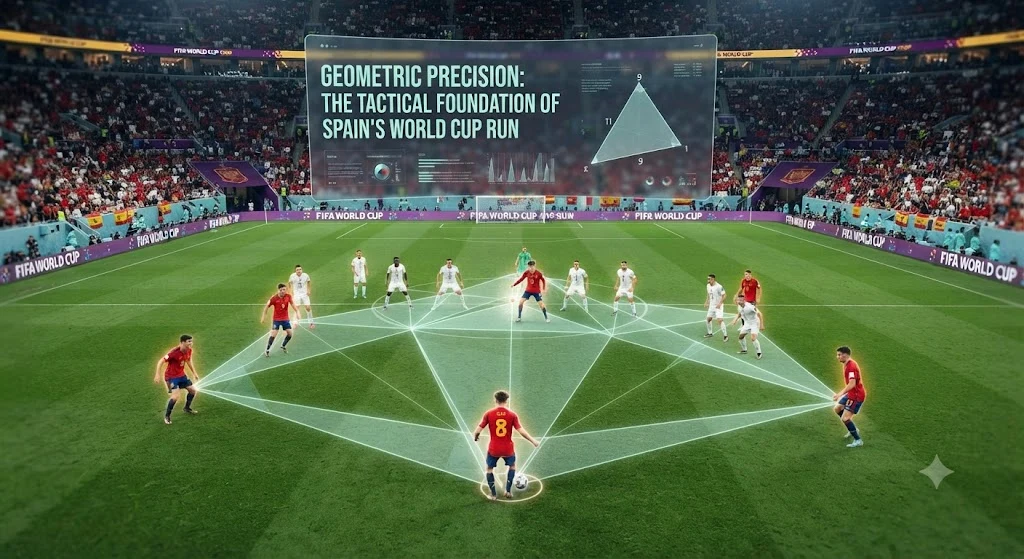
Spain’s path to the Fifa World Cup final at MetLife Stadium has been defined by more than just physical prowess; the team has utilized complex geometric formations to dismantle opponents. During their 2-0 semi-final victory over France, Spain consistently employed passing triangles that forced defenders into difficult tactical choices, effectively controlling the flow of the game.
By positioning players in triangular configurations, Spain created multiple passing lanes that required French defenders to commit to specific routes. This forced France into a state of constant reaction, as the Spanish players frequently adjusted their positions to stretch the defense. According to the analysis, the effectiveness of these triangles relies on finding a balance: keeping players close enough for rapid combinations while maintaining enough distance to prevent a single defender from blocking multiple passing options.
The strategy mirrors the "triangle offence" popularized by the Chicago Bulls under coach Phil Jackson, which similarly prioritized maintaining multiple scoring and passing alternatives. For Spain, the success of this approach is rooted in the speed of their decision-making. By continuously reconfiguring their formation, Spain forced France to solve new tactical problems faster than they could process them. Following the match, French player Kylian Mbappé noted that a "lack of communication" hindered his team's ability to effectively press the Spanish attack.
As the final against Argentina approaches, the role of spatial control remains a critical variable. Research into player-tracking data suggests that the game is increasingly a contest of probabilities, where the value of a pass is measured by how it limits an opponent's future options. Whether Argentina can disrupt this geometric rhythm will likely be a decisive factor in the championship match.
Source: The Conversation
No comments yet. Be the first to share your thoughts.