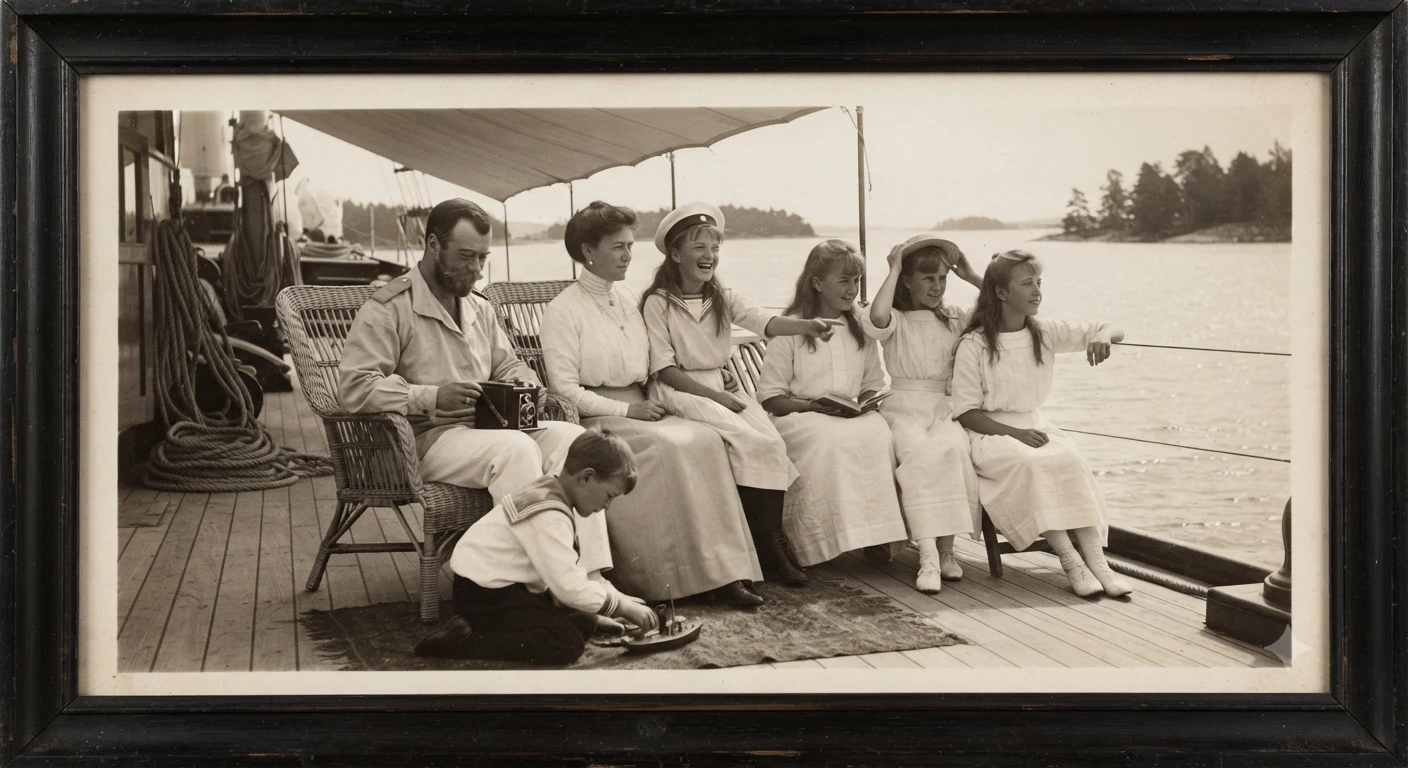
Long before the Bolsheviks executed Czar Nicholas II and his family in July 1918, the Romanovs documented their daily lives with a fervor rarely seen among European royalty. Using Kodak Brownie cameras, the five imperial children captured candid moments of their parents, their travels, and their pastimes, such as boating and tennis. These personal images, now held in various archives and collections, provide a starkly human perspective on a family often criticized for their perceived aloofness.
Historian Helen Rappaport notes that these photographs, which were never intended for public viewing, reveal the distinct personalities of the four grand duchesses—Olga, Tatiana, Maria, and Anastasia—and their younger brother, Alexei. While public portrayals often depicted the sisters as a uniform group in matching white dresses, the private albums show a more complex reality. Anastasia, for instance, is frequently captured in playful, irreverent poses, such as wearing false teeth or mimicking her father, while her siblings are shown in more introspective or maternal roles.
The family’s reliance on photography was partly influenced by the traditions of Queen Victoria, the grandmother of Czarina Alexandra. However, as the Romanovs faced increasing political instability and the secret burden of Alexei’s hemophilia, their lives became more insular. This retreat from public view, intended to protect the heir, inadvertently fueled public resentment. Despite the tragic end of the dynasty, these snapshots continue to captivate historians and the public alike, humanizing a family that struggled to adapt to the rapid political shifts of the early 20th century.
Source: Smithsonian Magazine
No comments yet. Be the first to share your thoughts.